Waterfront Pool Construction
Building a pool on a waterfront property requires planning beyond the pool itself. Seawalls, setbacks, drainage, groundwater, flood zones, access, and site conditions all affect where and how the pool can be built.
Can a pool be built on a waterfront property? In many cases, yes — but the design must account for more than the pool itself. Seawalls, setbacks, drainage, groundwater, flood-zone requirements, access, utilities, and the condition of the surrounding property may all affect where and how the pool can be built. Pool Creations designs and constructs residential swimming pools while coordinating required site information, engineering, permitting, and specialist input when waterfront conditions affect the project.
What Needs to Be Reviewed Before Design Begins
Waterfront pool feasibility depends on a range of site-specific factors. These should be reviewed early — before the homeowner becomes committed to a layout that may not be practical.
What Makes Waterfront Pool Construction Different
Waterfront properties often have less usable yard area between the home and the water than a typical residential lot. The seawall location, local setback requirements, and any easements along the water's edge reduce the available footprint before the pool design even begins. Setback requirements vary by jurisdiction and property type — they are not a single universal distance from the shoreline.
High groundwater, coastal soil conditions, and drainage patterns can affect excavation planning, shell construction, and long-term pool performance. Elevation differences between the home, pool area, and waterfront can create both design opportunities and engineering requirements.
Access for excavation equipment, material delivery, and construction crews is frequently constrained by narrow side yards, existing structures, docks, and neighboring properties. Salt air and coastal exposure may affect material selection, equipment placement, and long-term maintenance requirements.
Flood-zone classification, local setback requirements, and any applicable environmental restrictions add another layer of review before a final design can be developed. Some beachfront properties may also be affected by Florida's Coastal Construction Control Line program — a mapped regulatory jurisdiction, not a single universal shoreline setback. These issues are best identified early in the planning process.
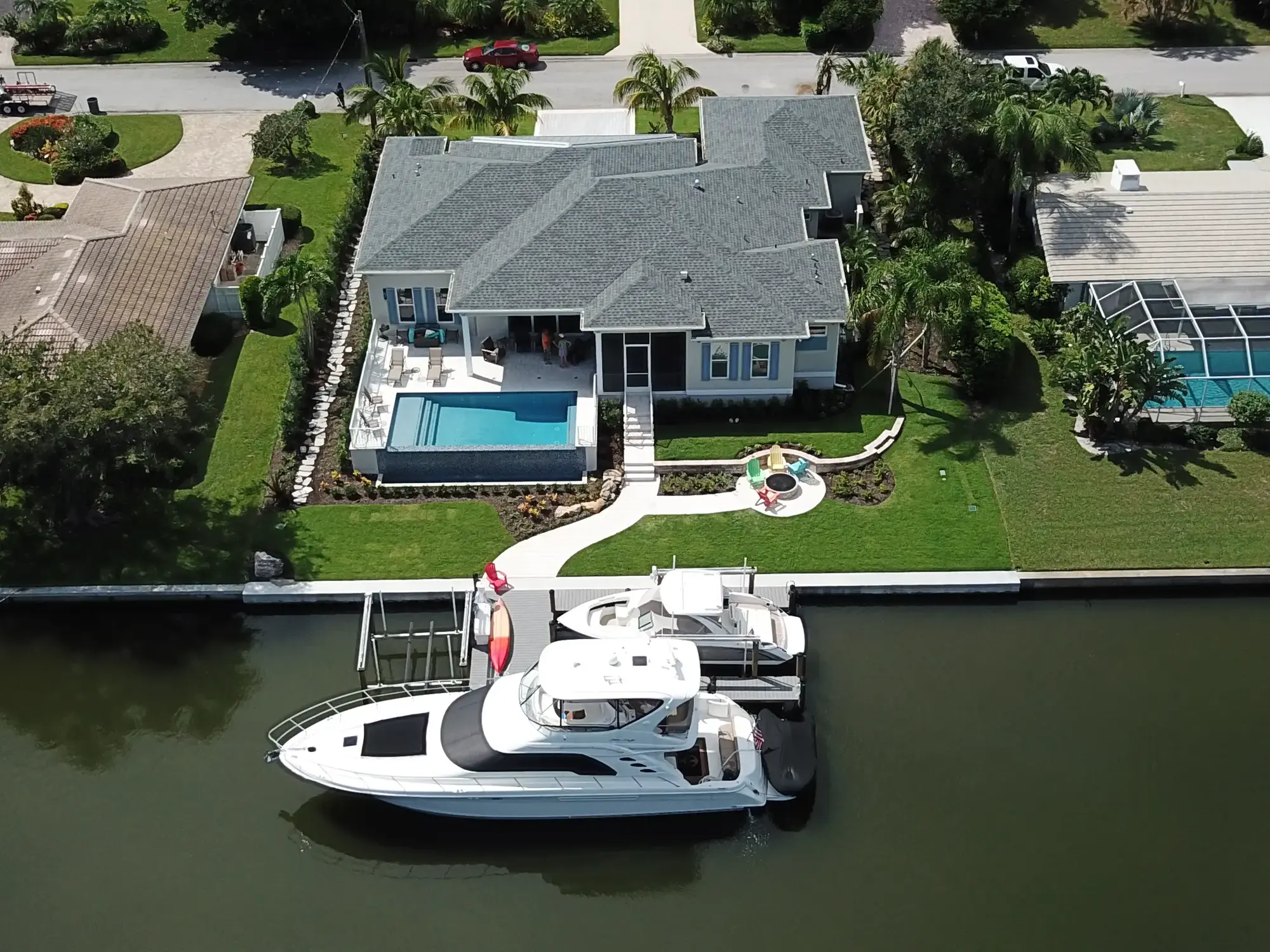
Can a Pool Be Built Near a Seawall?
A pool may be possible near a seawall, but feasibility depends on a combination of factors that must be reviewed for the specific property. There is no universal minimum distance that applies to every project.
Relevant considerations include the distance from the seawall, the seawall's construction and condition, the proposed pool depth, excavation limits, soil pressure on the seawall, existing tiebacks or anchors, drainage, engineering requirements, local code and permitting, and construction access.
When a proposed pool is near a seawall, a qualified engineer or marine specialist may need to evaluate the seawall and surrounding conditions before the final pool design is approved. Pool Creations does not certify seawalls, perform structural engineering inspections, or establish a universal minimum pool-to-seawall distance.
Seawall Condition and Pool Planning
Pool Creations can consider visible site conditions and seawall proximity during pool planning. When structural condition, tiebacks, anchors, soil stability, or excavation effects are in question, evaluation by the appropriate engineer or marine professional may be required. Visible concerns that may warrant further evaluation include cracking, leaning or bowing, settlement, failed caps, corrosion, soil loss behind the wall, voids, drainage problems, previous repairs, and deteriorated tiebacks. Seawall condition should not be assessed from photographs or surface observations alone.
When the seawall needs repair or replacement, it is often more practical to address that work before or in coordination with the pool project. Equipment access, excavation, site disturbance, pool placement, structural interaction, and the risk of future damage to completed pool improvements are all reasons to coordinate seawall and pool work together when possible.
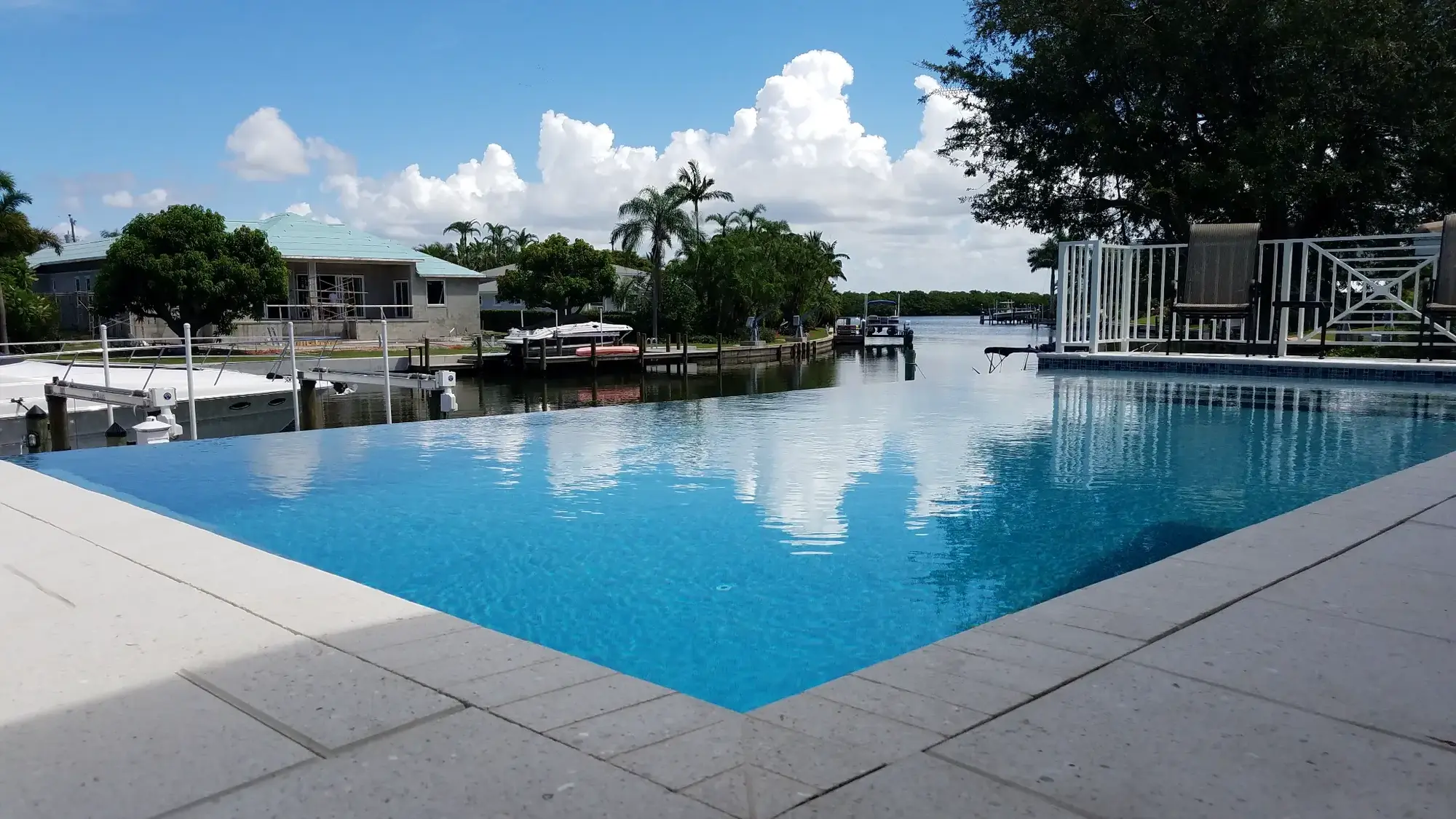
Flood-Zone and Elevation Considerations
Waterfront homes in Southwest Florida are frequently located in mapped flood-hazard areas. Flood-zone requirements can affect pool layout, deck elevations, electrical components, and equipment placement. The applicable requirements depend on the mapped flood zone, required elevations, adopted building codes, and local floodplain review — not a single universal rule.
FEMA publishes flood-hazard mapping and national floodplain guidance. Local floodplain administrators, building departments, adopted codes, and project-specific design determine the permitting requirements that apply to a specific property. Pool Creations does not publish specific elevation rules, as requirements vary by jurisdiction and are subject to change.
High Groundwater and Excavation
Coastal and waterfront properties may encounter high groundwater during excavation. Groundwater levels vary by location, season, and soil conditions — not every waterfront property has the same conditions. Construction planning for high-groundwater sites may involve groundwater control, excavation stability measures, construction timing, shell construction planning, hydrostatic pressure design, and site protection.
Pool Creations reviews site conditions as part of the planning process. Hydrostatic pressure on the pool shell is a permanent consideration for pools in high-groundwater areas, and shell design accounts for this as a standard part of construction.
Drainage Around a Waterfront Pool
Southwest Florida receives heavy seasonal rainfall, and waterfront properties often have limited drainage options because of the proximity to the water. Pool deck drainage must be coordinated with the overall property drainage plan to manage roof runoff, deck runoff, neighboring property elevations, waterfront slope, seawall drainage, pool overflow, and existing landscape drainage.
Pool Creations designs pool decks with drainage in mind. The pool project does not automatically correct all existing site drainage problems unless that scope is specifically included in the project.
Pool Placement and Preserving the Water View
Waterfront pool design balances visual priorities with practical site constraints. Pool alignment with the water, sightlines from the home and lanai, deck and seating placement, spa location, water-feature placement, screen enclosure framing, privacy, sun exposure, wind, and dock access all factor into the layout.
The best visual placement must still work with setbacks, utilities, access, drainage, and engineering. Pool Creations develops layouts that address both the homeowner's view priorities and the site's physical constraints.
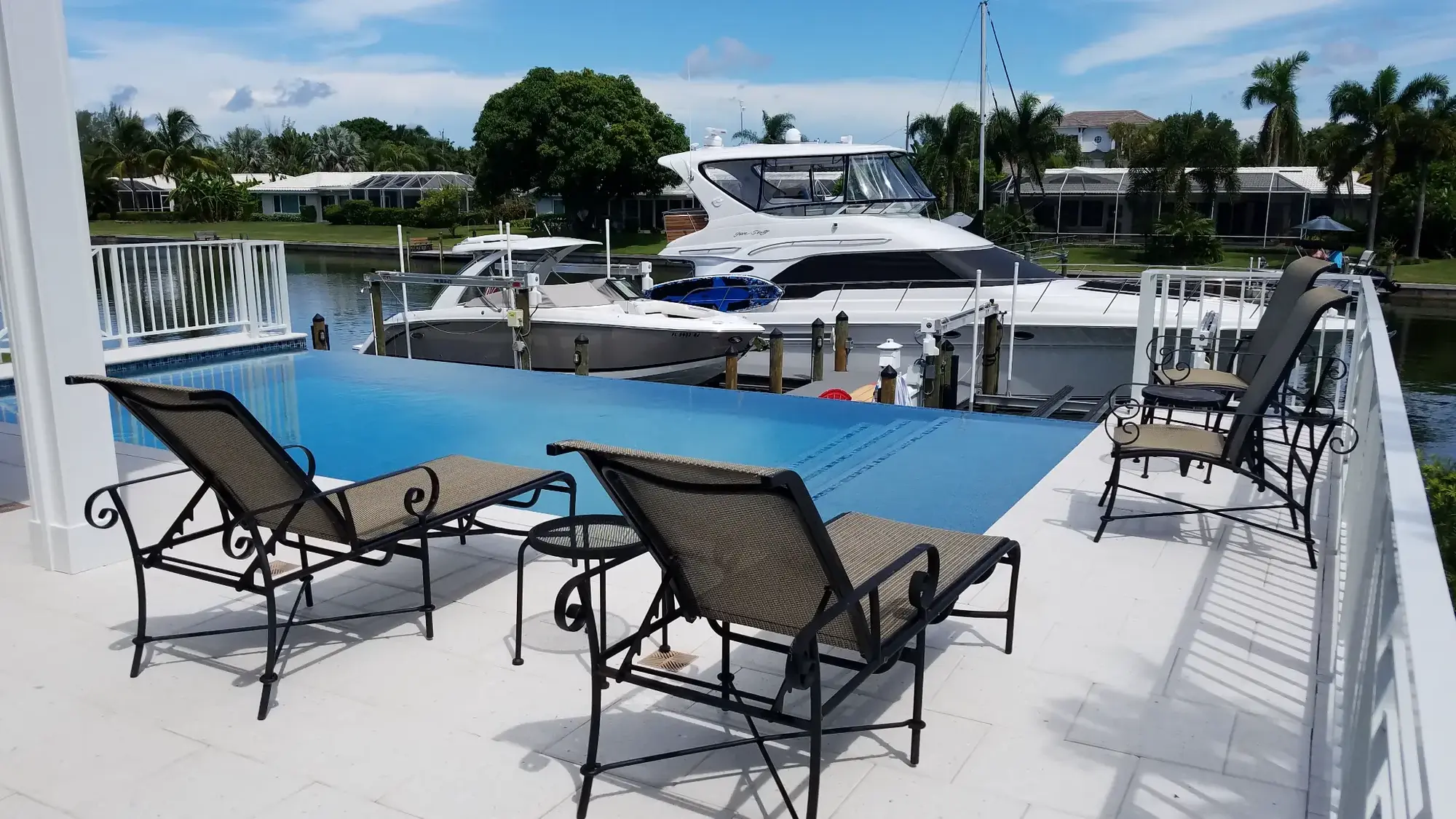
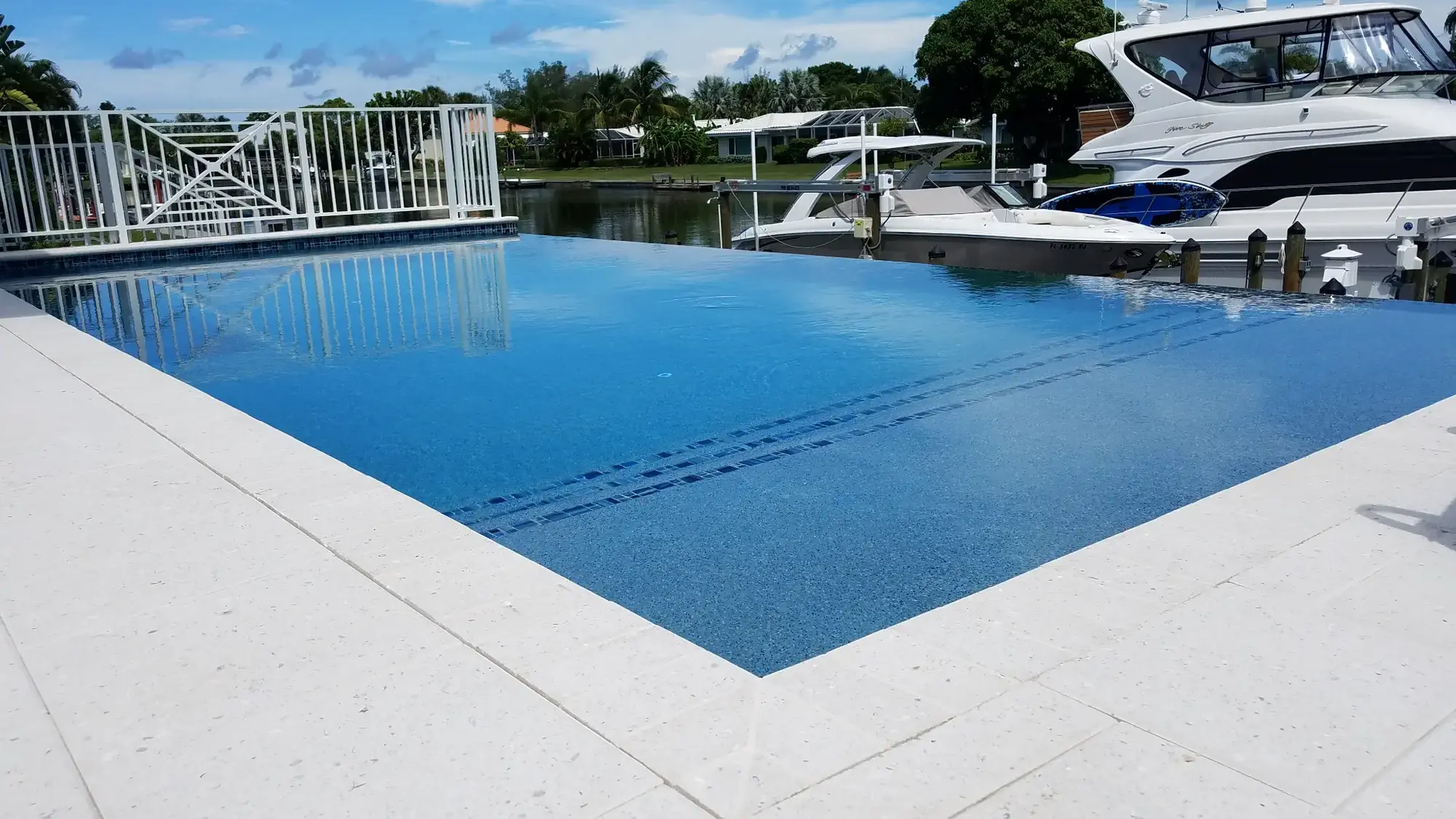
Infinity Edges and Negative-Edge Pools
A negative-edge design can visually connect the pool with the water view on waterfront properties where elevation differences allow the effect. Water flows over one or more walls into a catch basin below and is recirculated by a dedicated pump system.
Negative-edge pools require additional structural, hydraulic, grading, catch-basin, equipment, and engineering considerations. Not every waterfront property is suitable. Elevation differences may help or limit the design, and additional maintenance and operating systems are involved.
Pool Creations evaluates whether a negative-edge design is practical for the specific site before recommending it.
Pool and Spa Combinations for Waterfront Homes
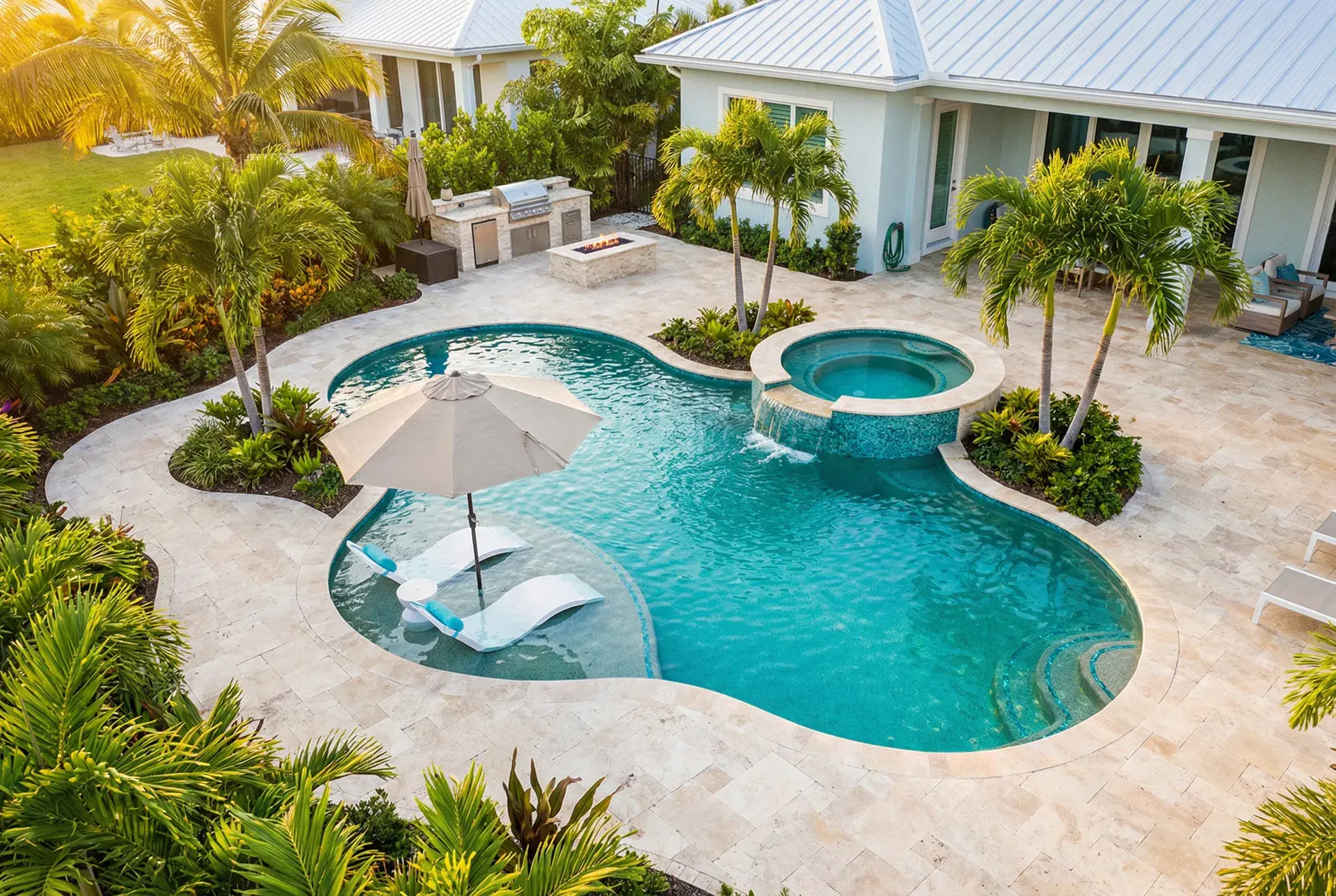
A raised spa overlooking the water, a flush spa with a spillover, or an integrated spa within the pool shell are all common configurations for waterfront homes. Spa placement should be planned with the water view, house access, equipment routing, and screen enclosure in mind.
Wind exposure, heating requirements, seating orientation, deck circulation, and privacy are all relevant to spa placement on a waterfront property. Pool Creations designs pool and spa combinations at a range of scales and configurations.
Coastal Exposure and Material Selection
Coastal exposure may increase corrosion and maintenance demands, especially where salt air, wind, and moisture are persistent. Equipment, fasteners, electrical enclosures, heater components, automation hardware, screen enclosure components, and outdoor fixtures may all be affected by coastal conditions. No material is corrosion-proof, but material selection and regular maintenance can extend the life of pool equipment and finishes in coastal environments.
Pool Creations discusses equipment placement, enclosure, and material selection as part of the waterfront pool planning process. Regular inspection and maintenance are important for pools in salt-air environments.
Saltwater Pools Near Saltwater Environments
A saltwater pool sanitation system uses a salt chlorine generator to produce chlorine from dissolved salt added to the pool water. This is a pool sanitation method — it is not the same as coastal salt-air exposure or seawater from a nearby canal, bay, or Gulf.
A saltwater pool on a waterfront property still requires normal pool chemistry, equipment care, and ongoing service. Proximity to saltwater does not change the pool into a seawater pool, and salt-air exposure from the environment is separate from the pool's sanitation system. Both factors should be considered when selecting equipment and planning maintenance.
Saltwater Pool InformationEquipment Placement on Waterfront Properties
Equipment placement on a waterfront property requires early planning because usable side-yard and rear-yard space is often limited. Relevant considerations include distance from the home, noise, flood-zone conditions, access for service, plumbing distance, salt-air exposure, drainage, screening, heater exhaust and clearances, electrical access, and neighboring property concerns.
Pool Creations does not provide code-specific clearance numbers without reviewing the applicable jurisdiction requirements. Equipment placement decisions are made as part of the overall site and design review.
Construction Access on Waterfront Properties
Waterfront properties frequently have restricted access because of narrow side yards, existing homes close to property lines, screen enclosures, seawalls, docks, mature landscaping, neighboring walls or fences, existing pavers, outdoor kitchens, and utility equipment. These constraints affect how excavation equipment, materials, and crews can reach the backyard.
Planning considerations may include temporary fence removal, screen-cage access, smaller excavation equipment, material staging, soil removal logistics, protection of driveways and adjacent property, and coordination with neighbors where appropriate. Pool Creations does not guarantee limited-access feasibility before a site visit.
Existing Seawalls, Docks, and Marine Structures
The pool design may need to account for existing seawall caps, dock walkways, boat lifts, utility lines to docks, tiebacks or anchors, shore power, drainage penetrations, existing permits, and any planned future seawall work. Known seawall or dock projects should be coordinated before final pool design to avoid conflicts with excavation, equipment access, and structural interaction.
Pool Creations designs and constructs residential swimming pools. Dock construction, seawall repair, and marine contracting are performed by qualified marine contractors. Pool Creations does not represent itself as a dock or seawall contractor.
Should the Seawall Be Repaired Before the Pool Is Built?
When a seawall needs repair or replacement, addressing that work before or in coordination with the pool project is generally more practical. Seawall work after the pool is complete can disturb the pool area, affect equipment, damage completed improvements, and create additional cost. Not every older seawall requires replacement, but the condition should be evaluated before committing to a final pool design.
Factors that influence sequencing include equipment access, excavation scope, site disturbance, pool placement, structural interaction between the seawall and pool, timing, engineering requirements, and the risk of future damage to completed pool improvements.
Pool Construction Near Waterfront Easements and Utilities
Waterfront properties may have drainage easements, utility easements, canal-maintenance areas, shoreline restrictions, dock utilities, irrigation lines, gas lines, electrical lines, and sewer or septic conditions that affect where a pool can be placed. The property survey and utility review are essential before finalizing the pool layout.
Easements cannot be waived or built over. Pool Creations reviews the survey and available utility information as part of the site planning process to identify conflicts before design work proceeds.
Requirements vary by property and jurisdiction. Final design and construction are subject to survey information, site conditions, engineering when required, current codes, and approval by the applicable permitting authorities. This page provides general information only and does not constitute legal, engineering, or permitting advice. Pool Creations does not determine CCCL jurisdiction, certify seawalls, perform engineering inspections, or issue flood-zone certifications.
Pool Barriers and Screen Enclosures
A waterfront view does not remove pool-barrier responsibilities. Florida law requires pool barriers, and the design must coordinate with screen enclosures, fences, gates, home openings, property boundaries, and seawall-side access. Applicable barrier requirements depend on the jurisdiction, structure type, and applicable code edition. Pool Creations does not publish detailed barrier code requirements, as rules are subject to change and vary by jurisdiction.
Screen enclosures on waterfront properties serve both barrier and coastal-exposure purposes. Pool Creations coordinates screen enclosure design as part of the overall pool project.
Screen Cage and Pool ConstructionWaterfront Pool Construction: Casey Key, Manasota Key, Venice Island, and Coastal Southwest Florida
Pool Creations serves waterfront and coastal communities throughout Southwest Florida, including Casey Key, Manasota Key, Venice Island, Sarasota, Nokomis, Englewood, Boca Grande, and waterfront areas of Venice and North Port. These properties often involve the seawall proximity, limited access, coastal exposure, and site-specific permitting conditions described on this page.
Pool Creations is based in Venice, FL, and has experience with the permitting requirements and site conditions common to barrier-island and waterfront properties in Sarasota and Charlotte Counties.
Are Waterfront Pools More Expensive?
A waterfront location does not automatically determine the price, but site conditions and design requirements can materially affect the project scope. Factors that may increase cost include access constraints, engineering requirements, flood-zone conditions, groundwater, seawall proximity, drainage, equipment placement, coastal material selections, and pool features such as a negative edge, raised spa, or expanded deck.
Pool Creations does not publish specific pricing. Every project is custom-designed and custom-priced after reviewing the specific site, survey, and homeowner goals.
New Pool Cost in Venice, FLHow the Waterfront Pool Planning Process Works
Review Goals and View
Understand the homeowner's desired pool layout, view priorities, and how the pool will be used.
Inspect the Site
Review available access, yard dimensions, existing structures, and site conditions.
Review the Survey
Confirm setbacks, easements, seawall location, utilities, and lot boundaries.
Identify Site Conditions
Evaluate seawall proximity, shoreline restrictions, easements, and utility conflicts.
Flood Zone and Elevation Review
Review flood-zone classification, base flood elevation, and equipment placement requirements.
Coordinate Engineering
Arrange required engineering or specialist evaluations when waterfront conditions affect the design.
Develop the Layout
Design the pool, spa, deck, and equipment placement with site constraints and view priorities in mind.
Review Materials
Select finishes, equipment, and materials appropriate for coastal exposure and the project design.
Complete Permitting
Submit permit applications and coordinate with the county, city, and any required agencies.
Schedule Construction
Establish a construction schedule with access planning, material staging, and site protection.
Is a Waterfront Pool Right for the Property?
A waterfront pool may be practical when:
- The site has adequate usable area
- Setbacks and easements allow construction
- Seawall and soil conditions are acceptable
- Construction access can be established
- Drainage can be addressed
- Engineering supports the design
- The homeowner's desired layout fits the site
Additional planning may be required when:
- The seawall condition is uncertain
- The home is close to the water
- Access is severely restricted
- High groundwater is present
- Flood-zone conditions affect equipment or deck elevations
- Utilities or easements cross the proposed area
- Existing marine structures conflict with construction
A final feasibility determination cannot be made from the website. Pool Creations reviews the specific property, survey, and site conditions before advising on what is practical.
Waterfront Pool Construction — FAQs
Schedule a Waterfront Pool Consultation
Pool Creations can review the property, survey, access, seawall proximity, drainage, flood-zone considerations, and design goals to determine which pool options may be practical.